
Nietzsche versus the Sheeple
Jesus said, “Blessed are the meek, for they will inherit the earth” (Matthew 5:5). My apologies: That Beatitude does not appear in the lectionary readings for today. On the other hand, it saturates today’s lectionary readings. Let us take a closer look. For meekness is more than a mere option among Christian virtues. It signifies a living faith.
We know the 19th Century philosopher, Friedrich Nietzsche, for declaring that “God is dead.” In his view, truly flourishing people get God out of the way in their quest to live by their own standards, not those imposed by another authority. He counseled embracing a will to power in pursuit of self-realization. With moral standards relativized, individuals may use or discard them based on their power quest. The sovereign individual reigns supreme over those willing to sacrifice their own preferences for others.
Thus, he deemed the meek losers. He disdained the “slave morality” of Christianity expressed in Jesus’s blessing of the meek and grounded in readings like today’s lectionary. He called us Christians, “sheeple,” who, like sheep, blindly follow the guidance of religious authorities. Authentic living according to Nietzsche requires constructing one’s own ideal of a glorious self and taking responsibility to live accordingly.
Strength in Meekness
But he did not understand meekness, did not see how the meek, not the self-made individual, inherits the earth. Furthermore, we too misunderstand meekness and miss its power. More than we wish to admit, we default to Nietzsche’s philosophy more than Jesus’s blessing of the meek. Look at the celebrities we celebrate, the politicians we vote for, the standards to which we hold ourselves. We want to be beautiful, secure, and unassailable or at least identify with people who project that image. We think of the meek as self-deprecating doormats. When Jesus says, “Blessed are the meek,” we admire his quaint reassurance to timid souls, but we will pass on that blessing ourselves, thank you very much.
But Jesus adds, “For the meek will inherit the earth,” not, “for they will feel better.” He promises power to those who do not seek it. Yes, Nietzsche is right, he offers this promise to slaves. Our Epistle lesson, 1 Peter 2:19-25, carries Jesus’s blessing forward to household slaves of pagan masters. Amid their daily grind, Christ freed them spiritually. Written before the historical moment to challenge the institution of slavery, it was time rather to discover freedom in Christ even amid economic and political oppression.
Power Amid Slavery (1 Peter 2:19-25)
When punished for doing the right thing against the slave holder’s wishes, the writer counsels, hold fast to the good. Beyond pleasing your mortal master, you have a higher calling: Bear witness to Christ by following the pattern of his nonviolent love, the pattern he put on display in his passion and death. Hold firm to what your conscience, formed by the Holy Spirit, deems good despite the abuse of others and the doubts of your heart. Then you share in Christ’s work of overcoming the world. Contrary to Nietzsche, the “sheeple” find real freedom from authoritarian control through meekness.
It takes greater strength to do that than to react to violence with violence or, conversely, to cower in shame. A mass of meek sheeple impact the world for peace far better than a violent army. Nonviolent love changed the world through resistance movements led by Gandhi and King. The meek are not weak. The only person called meek in the Old Testament was Moses (Numbers 12:3). The meek keep their eyes on God and follow God’s leading amid predators. They do so freely, resisting fearful temptations that coax them to look another way and grab their guns and money.
The Honor and Witness of Sheeple (John 10:1-10)
The meek exercise strength with gentleness and not cruelty, with love and not exploitation. The meek Christ, our good shepherd, our gate to green pastures, leads us not by force or fear but by knowing and loving us, calling us by name. The meek follower of Christ responds to that love and follows rather than letting fears of predators scatter them (John 10:1-10).
Nietzsche called us sheeple, but he underestimated sheep. While Charles Darwin’s idea of the survival of the fittest influenced Nietzsche’s promotion of a life aspiring to superpower, Darwin’s emphasis on the milder goal of adaptation and not dominance elicited Nietzsche’s scorn. From a Darwinian perspective, sheep are not so dumb after all. Vulnerable and docile, sheep nevertheless survive with the equipment given them and even find honor in human culture. Nietzsche preferred the way of foxes, but the way of sheep works quite well. Striving for dominance all too often leads to crashing and burning, as it did for Nietzsche himself.
The honor and witness of being sheeple exceeds that of the exalted individual. Sheep survive by sticking with the flock and following the shepherd, symbolizing the humble wisdom of living within one’s limits and accepting interdependence. Furthermore, they make themselves indispensable. They provide wool for clothing along with meat and milk for food. In antiquity, they provided sheepskin for scrolls. We have many sheep to thank for the collection of scrolls we call the Holy Bible. Speaking of holy, ancient people offered sheep as sacrifices to carry their sins away for cleansing.
Yes, like any livestock, sheep give their lives for much of this. But by giving much, they enjoy a rare esteem. Nobody loves a fox or misses a dead one. Sheep, on the other hand, live in the companionship of caring and affectionate shepherds who call them by name and whose voices they know. Just ask King David. When the prophet Nathan called him out for his sins against Uriah and Bathsheba, he told about a rich man killing a poor man’s beloved lamb to serve to guests. The shepherd-turned-king roared indignation until he realized he was the man.
Yes, the meek are like sheep. They might stray momentarily if frightened or distracted by a tasty patch of grass. But the vain myth of self-sufficiency does not waylay them thanks to their habit of returning their attention to the shepherd. The meek of the third beatitude appropriate the first beatitude, the blessing of the poor in spirit. They know that all good things from existence to egg drop soup ultimately come as gifts. In other words, they practice gratitude and build an ethic from there, not from a fantasy of self-sufficiency. Perhaps we should own the title, “sheeple.”
From Sheep to Shepherd
A lovely image of heaven from the Book of Revelation reads: “They will hunger no more, and thirst no more; the sun will not strike them, nor any scorching heat; for the Lamb at the center of the throne will be their shepherd, and he will guide them to springs of the water of life, and God will wipe away every tear from their eyes” (Rev 7:16-17). Revelation makes much of the metaphor of Christ as the Lamb whose blood redeems us, and here we see a fascinating transition: The sheep becomes the shepherd.
The vulnerable prey becomes the guiding protector. The meek lamb becomes an even meeker one, a shepherd. Becoming meeker means becoming stronger and gentler. No one exemplifies meekness like a shepherd. Gentle with the sheep, they provide nursing care along with police protection. Shepherds bond with sheep, find them when lost, lose sleep over them. As no eyes behold their labors other than those of the sheep and God, shepherds embody the strength and gentleness of the meek.
Moreover, culture responds paradoxically to their anonymous service to the lowly. On one hand, those who do long, dirty, dangerous work for low wages never fare well in social standing. When Luke had the Holy Hosts appear to shepherds on Christmas night, he followed his theme of the priority of the poor and marginalized, the last becoming first. Yet, not only Judaism but the surrounding Mediterranean religions used the metaphor of the shepherd for the ideal king, the one who guides, protects, and cares for the people. As much as we self-contradictory human beings clamor for charismatic self-promoters, in our heart of hearts, we long for a shepherd.
“The Lord is my shepherd,” we utter in the night when sleep eludes us and ruminations and worries invade, when green pastures and still waters seem a far off hope. “He leads me down right paths for his name’s sake, and though that path passes through this dark valley, I will not fear. For my shepherd is with me, counting me with a rod, protecting me with a staff.” And behold as Christ the Sheep becomes the Shepherd, so you the sheep transform to honored guest. The Shepherd-King signifies friendship by anointing your head and filling your cup to overflowing before those who would shame you, who would taunt you as sheeple for your vulnerability and lowliness.
This power to the sheeple scandalizes every narcissistic power-grabber who bothers to think. It challenges us, if we are honest. How much easier to leave meekness to Christ and seek power and revenge and unassailable security. How tempting to take things into our own hands or enlist a Nietzschean Strongman to do it for us. But Christ is ever with us and will not leave us to face our perils alone. “Blessed are the meek, for they will inherit the earth” against all appearances and odds. Faith is not only believing that. It is believing it so much that we live it.
Blessed are the meek, for they will inherit the earth (Matthew 5:5).
Related Posts
An Apology for Caspar Milquetoast
Dr, King’s Medicine: Love Your Enemies
Being Lost and Knowing It: Sermon on Luke 15:1-10
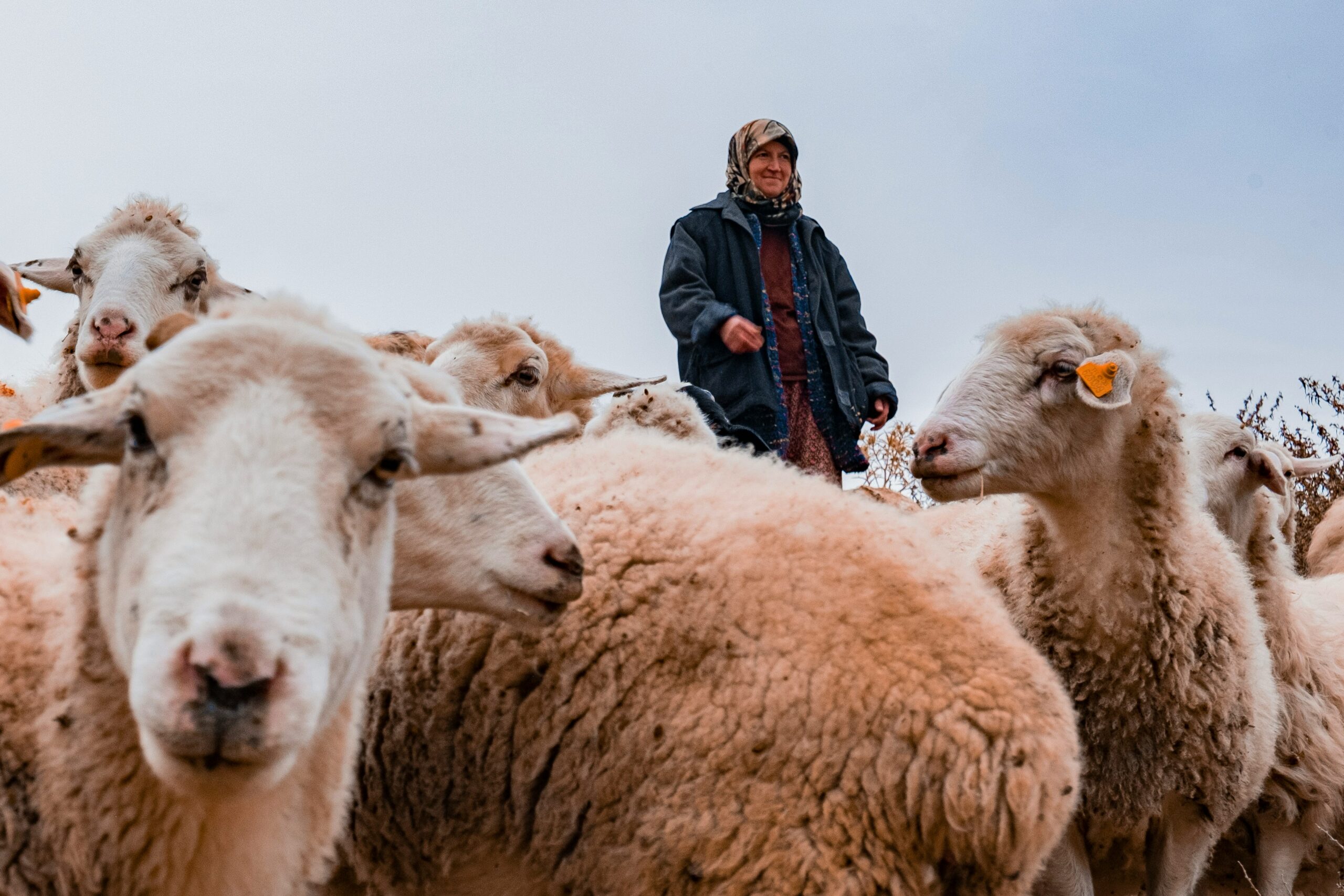
Photo by Ahmet Hakan Solak on Unsplash. Public Domain.
0 Comments